

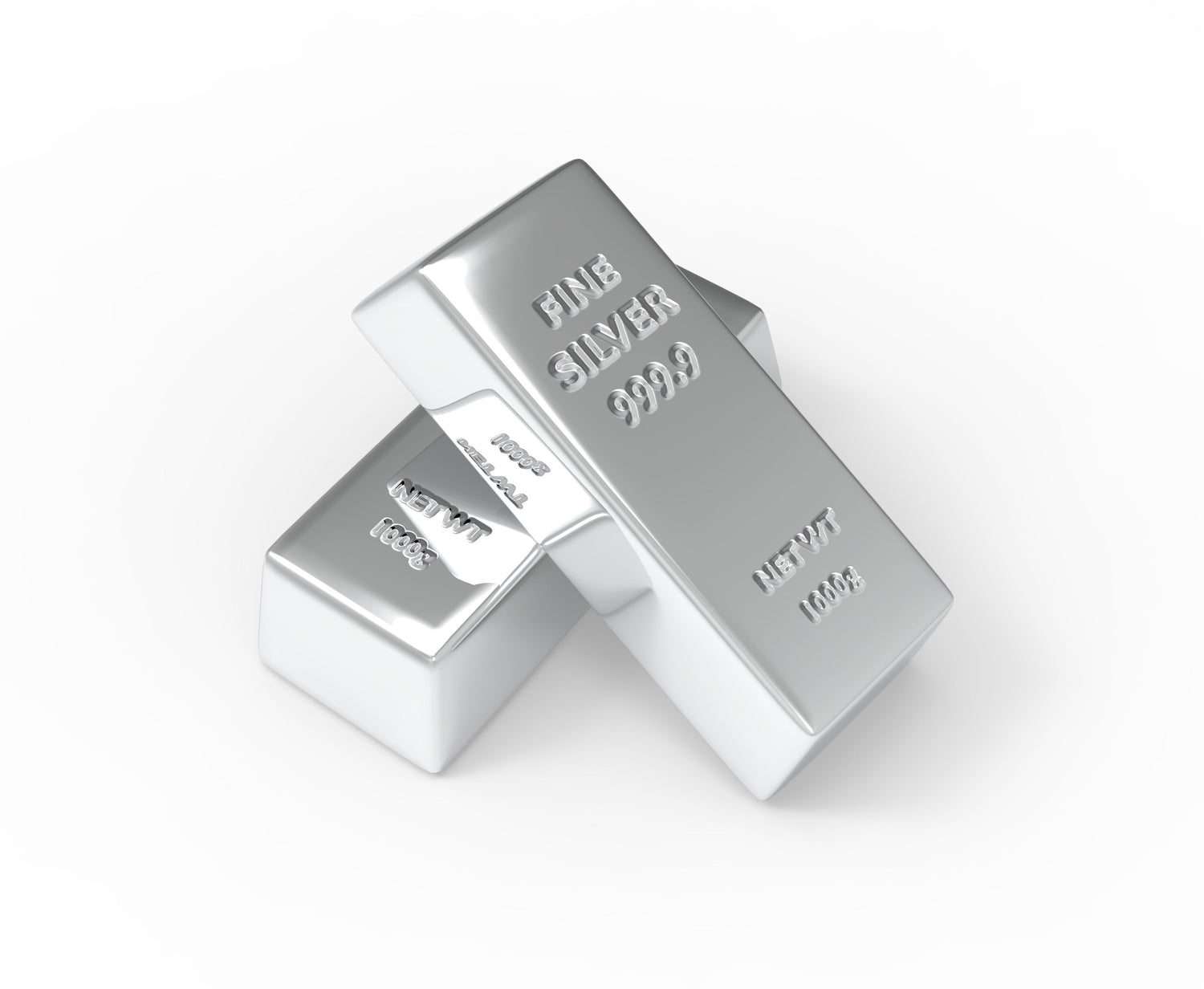
And what it's worth in 2026, when silver prices have nearly doubled.
There are four words you'll see on jewelry listings: sterling silver, silver-plated, silver-toned, silver-colored. They sound like variations of the same thing. They aren't.
Only one of them is solid silver. The other three vary wildly — from genuinely well-made pieces with centuries of craft tradition behind them, to cheap costume jewelry that won't survive a season.
Most listings don't make the distinction clear. Some are deliberately vague. So here's what each one actually is, and how to tell the difference between quality and cheap.
Why this is worth knowing now
Silver prices have nearly doubled in two years.
A sterling piece that cost a maker $40 to produce in 2023 costs $70 or more in 2026. The metal that ends up in your ear has gotten meaningfully more expensive — fast. That math has changed everything about what's on the jewelry market.
Some makers have responded by raising prices. Some have moved toward other quality materials that can hold an accessible price point honestly. And some — the ones racing to the bottom — have started using "silver-toned" and "silver-colored" listings to dodge the question entirely.
Knowing the difference matters more than it used to.
Sterling silver
Sterling is 92.5% pure silver, with the remaining 7.5% almost always copper. The "sterling" standard goes back to 13th-century England, when the Royal Mint formalized it as the highest practical grade for everyday silverwork — soft enough to shape, hard enough to wear.
If a piece is sterling, it's stamped .925 somewhere on the metal. Look on the inside of a ring, the back of a pendant. The stamp is the proof.
Sterling lasts. A well-made sterling piece will outlive the person wearing it. It tarnishes over time — that's silver's response to air, not a defect — but the tarnish polishes off and the metal underneath is the same metal you started with.
It's also the safest of the four for sensitive skin. (More on that in Part 3.)
Silver-plated
Silver-plated means a layer of real silver bonded to a base metal underneath. The base is usually brass, copper, or a proprietary alloy.
Here's the part most jewelry writing glosses over: not all plate is equal. This is where the quality-versus-cheap line really lives.
The original silver-plating technique is called Sheffield Plate — developed in 1740s England, when sheets of silver were fused to copper under heat and pressure. The resulting metal could be worked like silver, looked like silver, and cost a fraction as much. Georgian-era candlesticks, teapots, and serving trays made with Sheffield Plate are still in use today, nearly 300 years later. It is, by any honest measure, a craft tradition.
The modern version of quality plate — thick electroplating over a quality base alloy, often with multiple layers — holds up similarly well. Years of regular wear. Gentle aging. The layer staying intact.
The cheap version is something else. A thin flash plating, sometimes measured in microns, over inexpensive pot metal. The silver wears through quickly — especially at high-friction points like earring posts and the insides of rings — and what's underneath was never meant to touch skin. Months, not decades.
The category is the same. The maker is not. With silver-plate more than any other material, who made it matters more than what it's called.
Silver-toned
Silver-toned looks silvery. It contains no silver at all.
Sometimes it's a clear coating over a base metal. Sometimes it's an alloy that happens to read silver-colored to the eye — nickel, aluminum, stainless steel, zinc. Sometimes it's just bare metal that picked up its silvery shine in finishing.
The term isn't deceptive on its own — it's describing color, not material. But a listing that only says silver-toned, without naming what it actually is, is telling you something. The maker doesn't think the material is a selling point.
Silver-colored
Even fewer rules apply.
"Silver-colored" is a descriptive term, not a material claim. Whatever it is — plastic, painted resin, anodized aluminum, the same coating you'd recognize from a Christmas ornament — it isn't silver. And the listing is letting you know, technically, without quite saying it.
This is the floor.
How to tell what you're buying
If a piece is sterling, the listing will say so. It will name the standard (.925, "sterling," or "solid silver") and the stamp will be on the metal itself. Flip your existing jewelry over — if it's sterling, you'll find the mark.
If a piece is silver-plated, a good listing will tell you that too — and the best ones will name the base metal and the plating method. The Sheffield-Plate-tradition makers I work with say "silver-plated over [brass / copper / nickel-free alloy]" or similar. The vague ones just say "silver-finish" and hope you don't notice.
If a piece is silver-toned or silver-colored, that's all you'll see. There's nothing else to disclose because there's nothing else to claim.
The difference that actually matters, after all of this, isn't sterling vs. plate.
It's whether the maker cared about the metal — whatever they used.
About this series
This is Part 1 of three.
Part 2 (next Thursday): What Argentium is — the upgraded version of sterling, developed in the 1990's — and why some of the makers I carry choose it over standard sterling.
Part 3: Sterling silver can be hypoallergenic. Most "silver allergies" aren't allergies to silver at all. I'll explain what's actually happening, and how to find pieces that won't trigger a reaction.
If you'd rather skip to looking at actual jewelry: every silver-bearing piece at Harold & Hazel names its material plainly. Quality sterling, quality plate, quality Argentium — all from makers I know by name.


Leave a comment
This site is protected by hCaptcha and the hCaptcha Privacy Policy and Terms of Service apply.